


Hey there! As a supplier of Steel Frame Bridge, I've spent a lot of time diving into the nitty - gritty details of these amazing structures. One of the most crucial aspects that I'm super excited to share with you today is the load distribution characteristics of a steel frame bridge.
Basics of Load on Steel Frame Bridges
First off, let's talk about the types of loads that a steel frame bridge has to deal with. There are basically two main categories: dead loads and live loads.
Dead loads are the permanent weights that the bridge has to support. This includes the weight of the steel frame itself, the decking, any attached fixtures like railings or lighting systems. Since steel is a relatively heavy material, the dead load of a steel frame bridge is significant. But here's the cool part: steel has a high strength - to - weight ratio, which means it can handle this self - weight quite efficiently.
Live loads, on the other hand, are the variable loads that come and go. This can be the weight of vehicles, pedestrians, and even wind or seismic forces. Vehicles are the most common live load on a bridge. When a big truck rolls onto a steel frame bridge, it creates a concentrated load at the points where its wheels touch the deck.
How Load is Distributed Horizontally
In a steel frame bridge, the horizontal load distribution is a key factor in ensuring its stability and safety. The steel frame acts like a giant network, spreading the load across different components.
The deck of the bridge is usually the first point of contact for the loads. When a vehicle drives on the deck, the load is transferred from the deck to the longitudinal girders. These girders run along the length of the bridge and are like the main highways for load transfer. They take the load from the deck and pass it on to the cross - girders. The cross - girders, as the name suggests, run perpendicular to the longitudinal girders. They help in distributing the load evenly across the width of the bridge, preventing any single part from bearing too much stress.
The joints in the steel frame also play a vital role in horizontal load distribution. Well - designed joints can effectively transfer the load between different members of the frame. For example, pinned joints allow the members to rotate slightly, which helps in redistributing the load when there are changes in the loading conditions.
Vertical Load Distribution
When it comes to vertical load distribution, the piers and abutments are the heroes. The load from the steel frame and all the traffic on it eventually makes its way down to these support structures.
The piers are the vertical columns that are placed at intervals along the length of the bridge. They are designed to carry the weight of the bridge and transfer it to the ground. Each pier has to support a specific portion of the total load. The load carried by each pier depends on its position, the span length between piers, and the distribution of the live and dead loads on the bridge at any given time.
The abutments are located at the ends of the bridge. They support the bridge and also resist the lateral forces, such as the horizontal thrust created by the loads. The vertical load from the bridge is transferred to the soil beneath the abutments through the foundation system. The foundation has to be carefully designed to ensure that the load is distributed evenly over a large enough area to prevent excessive settlement.
Impact of Different Bridge Types on Load Distribution
There are other types of steel bridges out there, like Corrugated Steel Bridge, Composite Steel Bridge, Corrugated Bridge, and Galvanized Bridge, and they each have unique load - distribution characteristics.
Corrugated steel bridges have a corrugated shape in their structural members. This corrugation provides additional stiffness and strength, which affects how the load is distributed. The corrugations can help in spreading the load more evenly over the surface of the bridge, reducing stress concentrations.
Composite steel bridges combine steel with other materials, usually concrete. The interaction between the steel and concrete elements changes the load - distribution pattern. The concrete slab on top of the steel girders helps in distributing the load laterally, and the steel provides the necessary tensile strength.
Corrugated bridges, similar to corrugated steel bridges, use the corrugation to enhance load - carrying capacity. The wavy shape helps in redirecting the load, making the bridge more efficient in handling both vertical and horizontal forces.
Galvanized bridges, which have a zinc coating on the steel, have a similar load - distribution pattern to regular steel frame bridges. However, the zinc coating can increase the durability of the bridge, which in turn affects its long - term load - carrying capacity. The coating protects the steel from corrosion, ensuring that the load - distribution mechanisms remain intact over time.
Design Considerations for Load Distribution
As a bridge supplier, we need to consider a whole bunch of factors when designing a steel frame bridge to ensure proper load distribution.
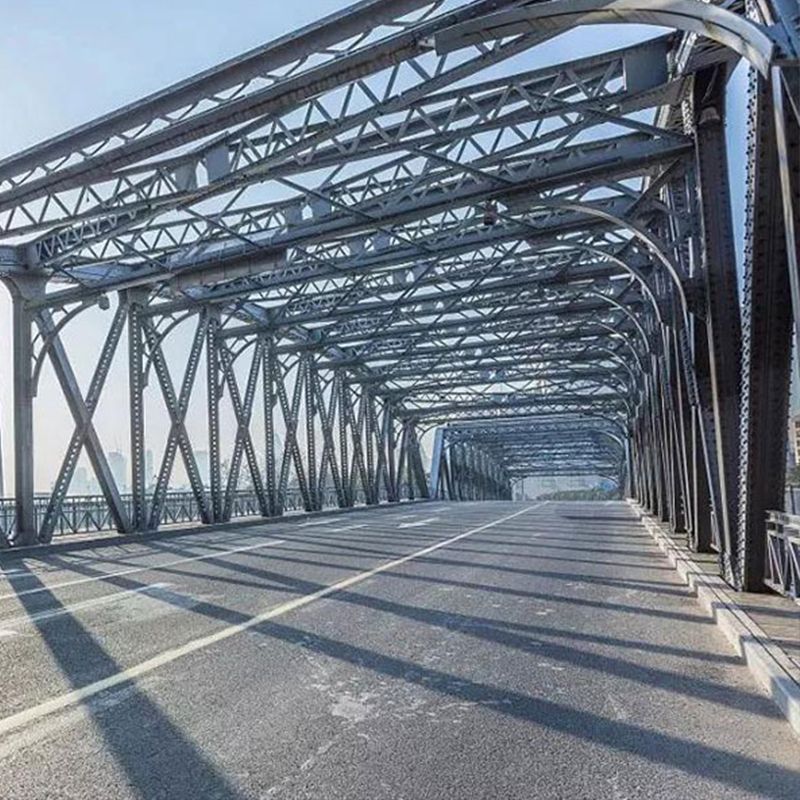

First, the geometry of the bridge is crucial. The span length, the height of the piers, and the width of the deck all influence how the load is distributed. For example, a longer span will require a more robust load - transfer system to ensure that the load can be safely carried across the gap.
Material properties are another important consideration. The strength, stiffness, and ductility of the steel used in the bridge affect its load - distribution characteristics. High - strength steel can carry more load with less material, but it also has different deformation characteristics compared to regular steel.
We also need to take into account the environmental factors. Wind can create uplift forces on the bridge deck, and seismic activity can generate sudden and intense horizontal loads. By carefully analyzing these factors, we can design a bridge that can withstand these additional forces and distribute the load effectively under all conditions.
Importance of Proper Load Distribution
Proper load distribution is the name of the game when it comes to the safety and longevity of a steel frame bridge. If the load is not distributed evenly, it can lead to stress concentrations in certain parts of the bridge. These stress concentrations can cause fatigue cracking, which can eventually lead to the failure of the bridge.
Even distribution of load also ensures that the bridge can handle the expected traffic volume over its design life. A well - designed load - distribution system can prevent premature wear and tear of the bridge components, reducing the need for frequent maintenance and repairs.
Let's Talk Business!
If you're in the market for a steel frame bridge, or any of the other types of steel bridges I mentioned, like Corrugated Steel Bridge, Composite Steel Bridge, Corrugated Bridge, or Galvanized Bridge, we're here to help. We have the expertise and experience to design and supply a bridge that meets your specific needs. Whether it's a small pedestrian bridge or a large highway bridge, we've got you covered. Reach out to us for a consultation, and let's start building the perfect bridge together!
References
- "Steel Bridge Design Handbook" by AASHTO
- "Load and Resistance Factor Design (LRFD) for Steel Bridges" by the Federal Highway Administration
- "Bridge Engineering Handbook: Fundamentals, Second Edition" edited by Wei - Wen Yu