


So, you're sitting there, maybe sipping on a cup of coffee, and you start thinking about composite steel bridges. You might be wondering, "How does a composite steel bridge accommodate expansion and contraction?" Well, you've come to the right place. I'm a supplier of Composite Steel Bridge, and I'm here to break it down for you in a way that's easy to understand.
First off, let's understand why expansion and contraction are even a thing for bridges. You see, materials, especially steel, change in size depending on the temperature. When it's hot outside, the steel in the bridge heats up and expands. On the other hand, when it's cold, it cools down and contracts. If a bridge isn't designed to handle these changes, it can lead to some serious problems, like cracking, buckling, or even structural failure. And trust me, you don't want to be driving on a bridge when that happens!
One of the key ways a composite steel bridge deals with expansion and contraction is through the use of expansion joints. These are like little gaps or flexible connections in the bridge structure. They allow the bridge to expand and contract without causing damage. Think of them as the "give" in the bridge. When the steel expands, the expansion joints close a bit, and when it contracts, they open up. It's a simple but effective solution.
There are different types of expansion joints used in composite steel bridges. Some are made of rubber, which is flexible and can absorb the movement. Others are metal, like steel or aluminum, and are designed to slide or pivot. The choice of expansion joint depends on a few factors, such as the size of the bridge, the expected temperature range, and the amount of movement the bridge is likely to experience.
Another way composite steel bridges accommodate expansion and contraction is through their structural design. Engineers use a combination of steel and concrete in these bridges, and the way they're put together helps to manage the movement. The steel provides the strength and flexibility, while the concrete adds stability. The two materials work together to distribute the forces caused by expansion and contraction evenly across the bridge.
For example, in a composite steel bridge, the steel girders are often connected to the concrete deck in a way that allows for some movement. This connection is designed to transfer the forces between the steel and the concrete without causing excessive stress. It's like a well - choreographed dance between the two materials, where each one plays its part to keep the bridge safe and stable.
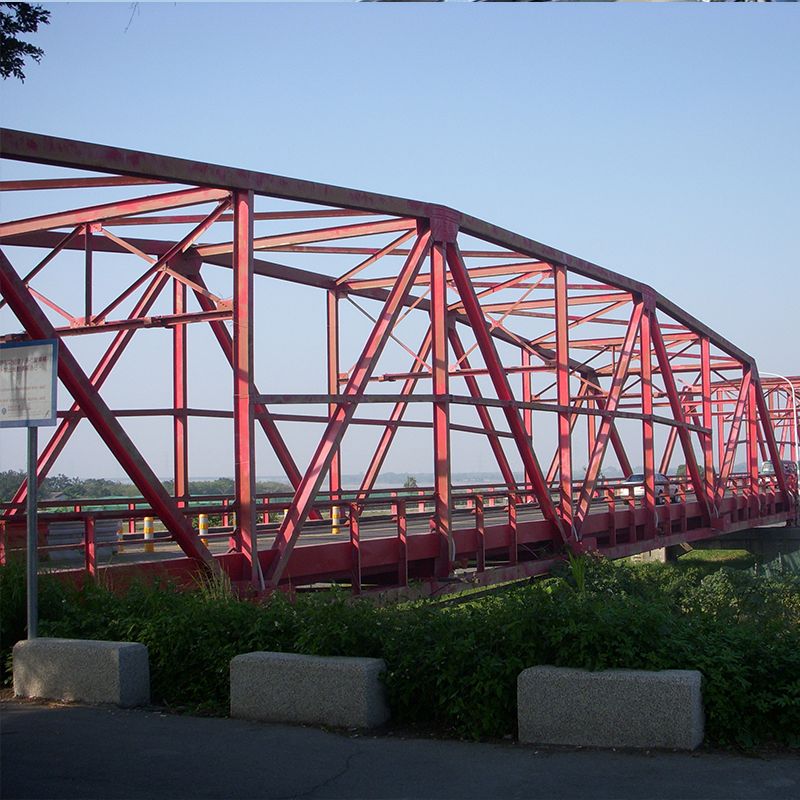
Now, let's talk about some other types of bridges that are related to composite steel bridges. There's the Steel Frame Bridge. These bridges are made up of a framework of steel beams and columns. They're known for their strength and durability, but they also need to deal with expansion and contraction. Similar to composite steel bridges, they use expansion joints and careful structural design to manage the changes in temperature.
Then there's the Galvanized Bridge. Galvanizing is a process where a layer of zinc is applied to the steel to protect it from corrosion. These bridges have the added benefit of being more resistant to the elements, but they still face the same expansion and contraction issues. The expansion joints and structural design principles are similar to those used in composite steel bridges, but the galvanized coating can sometimes affect the way the bridge behaves.
The Corrugated Bridge and Corrugated Steel Bridge are also worth mentioning. The corrugated shape of the steel in these bridges gives them some natural flexibility. This flexibility helps them to accommodate expansion and contraction to some extent. However, they still rely on proper expansion joints and structural design to ensure their long - term stability.
As a supplier of composite steel bridges, I've seen firsthand how important it is to get the design right when it comes to expansion and contraction. We work closely with engineers and contractors to make sure that every bridge we supply is safe and reliable. We use the latest technology and materials to ensure that the expansion joints and structural components are of the highest quality.
If you're in the market for a composite steel bridge, or any of the other types of bridges I mentioned, I'd love to talk to you. Whether you're building a small pedestrian bridge or a large highway overpass, we have the expertise and the products to meet your needs. We can help you design a bridge that not only meets your functional requirements but also takes into account the local climate and environmental conditions to ensure proper accommodation of expansion and contraction.

So, if you're interested in learning more or starting a project, don't hesitate to reach out. Let's have a chat about how we can work together to build the perfect bridge for you.
References
- "Bridge Engineering Handbook" by Wei - Fan Chen and Lian Duan
- "Steel Structures: Design and Behavior" by Salmon, Johnson, Malhas, and Mallet
- Various industry reports and research papers on bridge design and construction.